
“We are all so much together, but we are all dying of loneliness.” —Albert Schweitzer

In an era where so much connection is possible and the world is at our fingertips, where we have virtual reality connections via Skype or face-time or emails or tweets or texts, where all day long we hear pings and notifications and alerts that someone is ‘connecting with us’, research says that we are more lonely than ever.
Alan is a successful attorney. His work schedule and social calendars are full, yet, deep down he feels lonely and disconnected, and he feels that there is no one for him to turn to and share this deep sadness.
Rachel is a teacher, working around the clock with kids and colleagues. Yet, when she gets home in the evening she feels loneliness. Having moved for her job to a new town recently, she has been unable to form intimate connections that will take away that dreadful dark feeling. Alan and Rachel are more common then we believe. In my practice I work with adults, seniors, teens, couples, and singles. I see loneliness across the spectrum, and, I know that outside of my office, they do not talk about it.

Robert Waldinger, a Harvard psychiatrist, took over the more than 75-year-long Grant Study in 2003, becoming the fourth person to run it. He recently gave a TedTalk on it that has been viewed more than 6.5 million times since November 2015. Waldinger said in his TedTalk:
“People who are more isolated than they want to be from others find that they are less happy, their health declines earlier in midlife, their brain functioning declines sooner and they live shorter lives than people who are not lonely, good, close relationships seem to buffer us from some of the slings and arrows of getting old.”
Waldinger wants people to realize that the commercial projection of a good life – wealth, fame, career success – won’t bring them health or happiness. It’s the work they put into maintaining connections with other human beings that will.
He adds, “quality and intimacy, as well as stability and consistency also matter. Casual relationships, like the ones forged on social media won’t do; neither will contentious ones like an abusive marriage or an unreliable friend.”

“Keep in mind that to avoid loneliness, many people need both a social circle and an intimate attachment. Having just one of two may still leave you feeling lonely.” —Gretchen Rubin
In a recent article in Psychology Today, the author tries to help us understand loneliness. “What makes us happiest in life? Some people may point to fabulous fame and fortune. Yet hands down, surveys show that friends and family are the real prize. Even though our need to connect is innate, some of us always go home alone. You could have people around you throughout the day or even be in a lifelong marriage, and still experience a deep, pervasive loneliness. Unsurprisingly, isolation can have a serious detrimental effect on one’s mental and physical health.”
“I am lonely, yet not everybody will do. I don’t know why, some people fill the gaps and others emphasize my loneliness.” —Anaïs Nin
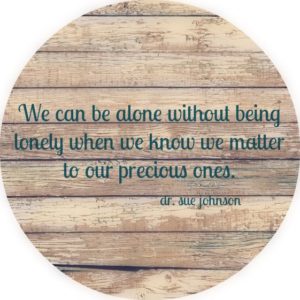
It is important to understated that loneliness is not the same as being alone. A person will always have time when they choose to be alone. Rather, loneliness is the feeling of being alone and feeling sad about it. All of us feel lonely some of the time. It is only when we seem trapped in our loneliness that it becomes a real problem.
“What should young people do with their lives today? Many things, obviously. But the most daring thing is to create stable communities in which the terrible disease of loneliness can be cured.” —Kurt Vonnegut
For many, social media has provided a pseudo escape from that feeling. At any time we can reach out to that smart phone, tablet, iPhone, in our purse or pocket, and know we can reach out… We scroll mindlessly and aimlessly, only to find out all the things that we are missing… and of course, that will increase loneliness. It seems that the ‘whole world’ is connecting and connected and having fun… ‘except for us’… It is especially serious with teens, where that pressure can add layers of loneliness that leads to depression and anxiety.

“Loneliness is never more cruel than when it is felt in close propinquity with someone who has ceased to communicate.” — Germaine Greer
As a couples and relationship psychotherapist, I so often encounter in my practice, that we can also be lonely when we are in a couple relationship. In fact as the quote above points out, it is even more poignant when I hear my clients say, “I am so lonely in this relationship.” I would say that loneliness is a silent epidemic in relationship as much as it is for individuals in our society.
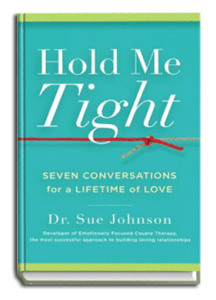
As Dr. Sue Johnson points out: when we feel isolation and loneliness in our close and intimate relationships, we get scared. When we feel that primary panic and fear of the disconnect from loved ones, our primal need for secure connection becomes alarmed. We then start to act out, protest, and fight for the connection. Isolation and loneliness are danger cues for our primary survival. Our DNA is wired into that connection as a basic safety cue for survival.
At our Hold Me Tight relationship enhancement Workshop – participants will learn and experience how to:
• Affirm strengths in your relationship by developing understanding and bonding.
• Address negative cycle patterns, and learn why they show up, and how to get out of them.
• Learn how to repair and forgive injuries, and become vulnerable with each other.
• Enhance your emotional, physical, and sexual closeness and INTIMACY.
I’m delighted to be offering my next Hold Me Tight couples workshop Saturday September 17 to Sunday September 18th 2016, with Owen Marcus, MA, author, workshop facilitator, and TEDxTalk presenter on Masculine Emotional Intelligence.
Owen brings with him the width of decades of leading and facilitating men’s group all over the country, helping men access their masculine vulnerability. Owen’s presence, and his work with couples and men, will enhance this upcoming Hold Me Tight workshop, by offering his depth, support, and perspective to the couples in our workshop.
Here are the links to Owen’s work: http://owenmarcus.com and Owen’s TEDX talk: What 10,000 Years Of Progress Has Cost | TEDxSpokane

SPACE IS LIMITED. SO SIGN UP ASAP.
As I keep the groups small and intimate, if you know you want to sign up, I will encourage you to do so shortly, as they do tend to fill up.
This is a great opportunity to have a deeper and vulnerable look at your relationship, develop new skills to recognize the cycle and patterns that inflict the relationship and keep you separated and apart.
It is also a beautiful time to connect and highlight the strengths of your relationship, and build on the positives that already exist.
Please do not hesitate to Contact me with any questions or for more information. Looking forward to sharing the workshop with you and I hope you are enjoying this beautiful summer.
Warm regards,
Dalia
(530) 692 0680
dalia@daliaanderman.com
http://daliaanderman.com/workshops
RSVP on Facebook here: https://www.facebook.com/events/496868083845854/

 We will hurt the ones we love. Our loved ones will hurt us. It is how to deal with this that matters.
 In her
  ear colleagues
 I am sorry YOU feel that way…
 Yes. Spring is here, no question.. the flowers are bursting with colors, the poppies are flaming the hillside, the bees are humming in frenzy, the sacred
  Though at times I will refer to sex as ‘Sacred Energy eXchange‘, and that it is, that elixir of love, that potion of passion and desire, that magic that lift us, it can all too soon become the source of pain,
  Many of us baby boomers are still in the hold of the guilt and shame and secrecy of the ‘joy of sex’. We painstakingly learned to accept that we are sexual beings. As our generation grew up, we started to read and write books about ‘
 According to
  So how do we maintain that magic even after those months or even the years, of the ‘honeymoon phase’ of a relationship, start to fade? Can that original powerful magic be sustainable? One of the toughest issues I face with my clients, couples or singles, is when that alluring elixir of love, that potent sexual energy ecstasy and desire is no longer there. We panic, we fall ‘out of love’, we become heart broken. Even if we are in a secure relationship and at the best of cases, we can talk about it, and even make it to therapy, it is still a loss that need to be attended to. Can we rescue it, rekindle it’s magic? As a couples therapist I say that this is a one of those ‘issues’ that bring couples into the therapy office.
 For her research Perel works across cultures and is herself fluent in nine languages. She coaches and consults with organizations and families, holds a private psychotherapy practice in New York, and speaks regularly on erotic intelligence, trauma, conflict resolution and infidelity. She is the author of
  We are in the times of leaving behind shame and guilt and embrace ourselves as sexual beings, full with desire, and sexual energy. We are willing to admit and embrace that SEX can be complex, difficult, beautiful, magical, painful, it is all of the above. It is the ‘agony’ and the ‘ecstasy.’
 If you would like to explore your own obstacles to reaching your full potential for sexual fulfillment and learn how to talk about sex with your partner, consider
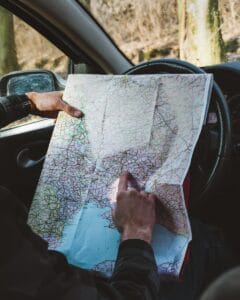 ‘Long time ago’ when we traveled we use to use
  Having a map can be useful and important. It helps to know these three places on the map of our lives: Where am I? Where to I want to go? How do I get there?
 At times it’s all about seeing the same landscapes with new eyes.
 One of the reasons I love traveling so much is that time stretches. It’s like being in a time machine, living as if time slows down. So much gets packed in a day. It feels like forever. It’s hard to believe it’s only been two weeks since I left town to go visit my daughter in London (with an added bonus of visiting friends in Paris).
 can be scary at times.
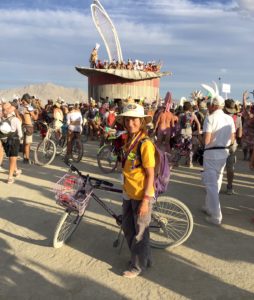 We provide mental health services to deal with anything from ‘home sickness’ to ‘drug over dose’, to sexual assault and domestic violence.
 This art installation piece called
  I am always touched and inspired by the risk and the willingness to ‘take the elevator’ and go into ‘raw spots’, talk about fears, pains, and hurts, move into forgiveness and ask for needs in a way that calls partners in rather then pushes them away. I’m always amazed to be in the presence of and hold space for couples who are moving out of and turning around those metal cages and being open and willing to become those illuminated inner figures in the sculpture of ‘LOVE.’
 In these days of uncertainties, with stress over the fires, the drought, mass shootings, and other dangers, local and global, it is more important than ever that we reach out to our loved one/s, to the ‘other’ that we feel #securely #attached to.
 Yes. We are mammals and we are wired for connection! When connection is threatened, we feel the primal panic that sends us into a fight-flight danger response. In our important relations it may look like fights – conflicts – protests for connection. We find comfort and strength in the bond with our loved ones. When that bond is questioned, when the bond is in distress, our sense of safety gets triggered, our
 In my Twenty+ years of marriage, I used to have endless conflicts with my then-husband about him not talking, not sharing emotions, not being as verbal as I wanted him to be. A caring, compassionate, soft-spoken quiet man, I would take his quietness personally, and would protest it endlessly.
 “I cannot do it right by her” he tells me. “I try to be emotional but then she thinks I am weak” he says, or “I hide my emotions and try to be reasonable but then she feels I am avoiding the issues and then when I do finally show anger (which is an emotion), she gets angry back.” And then he says, “I cannot win this,” and sighs, and then we give up, or resign, or withdraw or whatever we do (men and women) when we feel hopeless and helpless.
 One of the aspects we explore in my
  In his book